Mend a mouldy photograph
Mould shows itself as a fine speckle, a fibrous bloom across the surface, or the small rust-coloured marks the trade calls foxing. All three say the same thing: this print has spent time somewhere damp and undisturbed, which in this country is most lofts and every cellar.
It is also the one damage that spreads. A mouldy photograph in a box of dry ones is a problem for the whole box, and that is worth knowing before the lid goes back on.
The cleaning has to leave the grain behind. Take the spots off by softening the surface and you have swapped a speckled photograph for a plastic one, which shows the moment anyone looks at it properly.
What fills a gap in a damaged photograph is our best guess, not what was there.
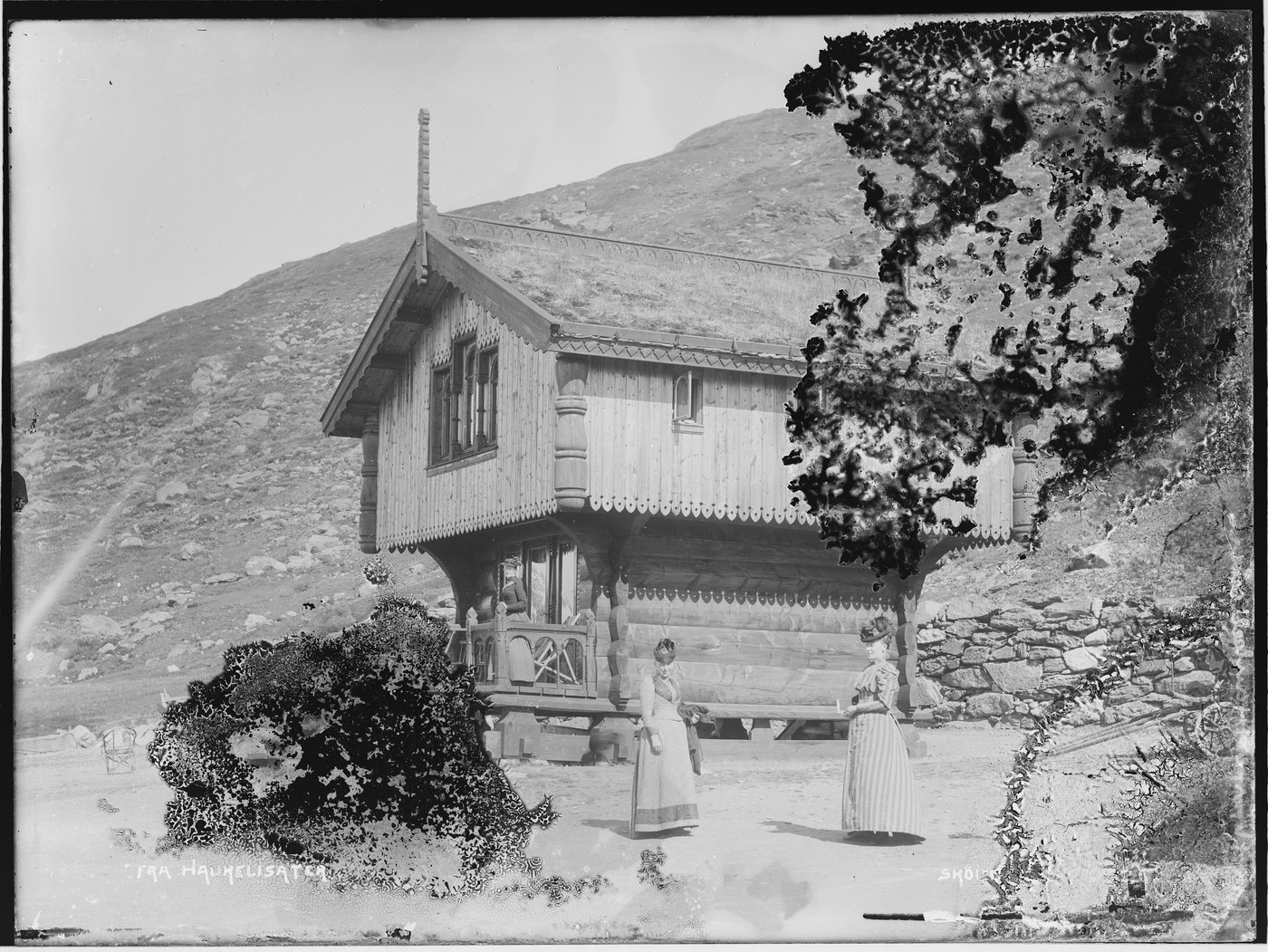
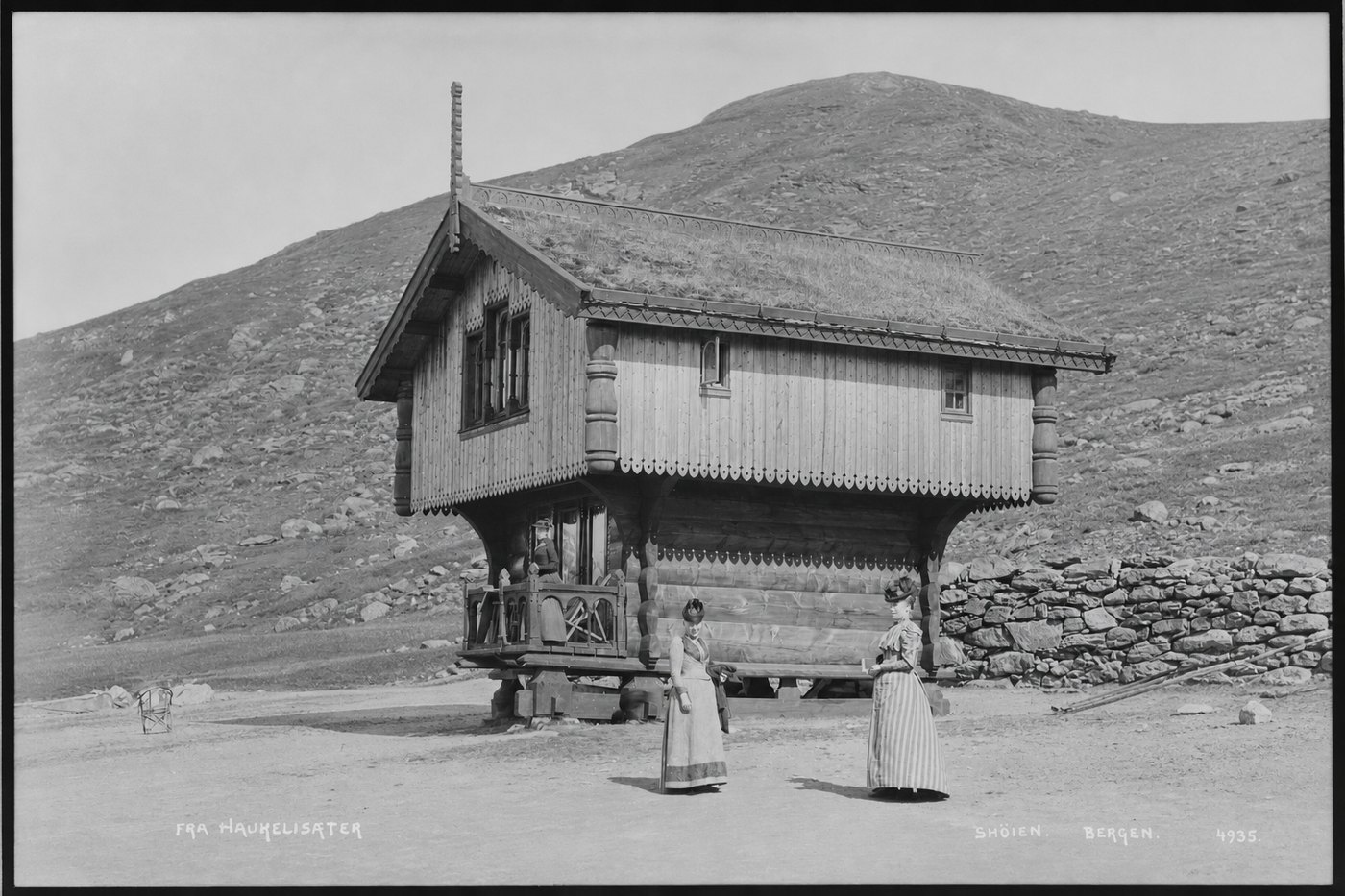
What comes back
- Speckling and bloom over faces, sky and plain ground, including the faint spots that pass for dirt on a screen.
- Rust-coloured foxing, and the ring of discoloured paper each spot sits in.
- The even tone underneath, carried through rather than smoothed over.
- The greyish veil a bloom leaves across an entire print.
What never comes back
- Emulsion the growth has eaten. The loss is real and it is filled all the same: where a pit sat over a face, a face arrives, and it is not the one that was eaten.
- Stopping it spreading in the drawer — the mend is of the scan, and the print itself needs the treatment in the guide below.
- Blurring our way out of trouble. If the spots will not come off without the grain, we leave a trace and say so.
What fills a gap in a damaged photograph is our best guess, not what was there.
Three of these, mended
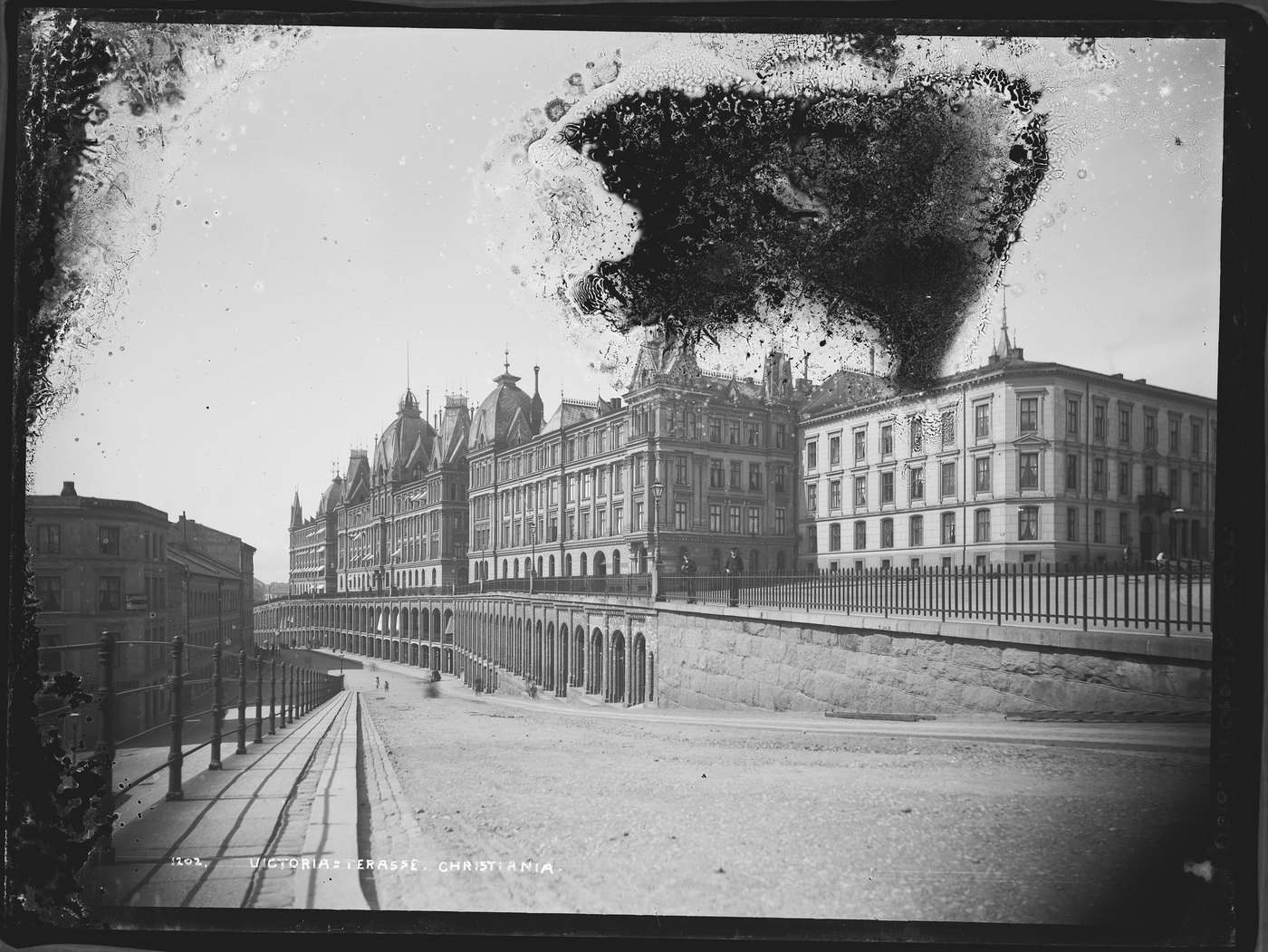
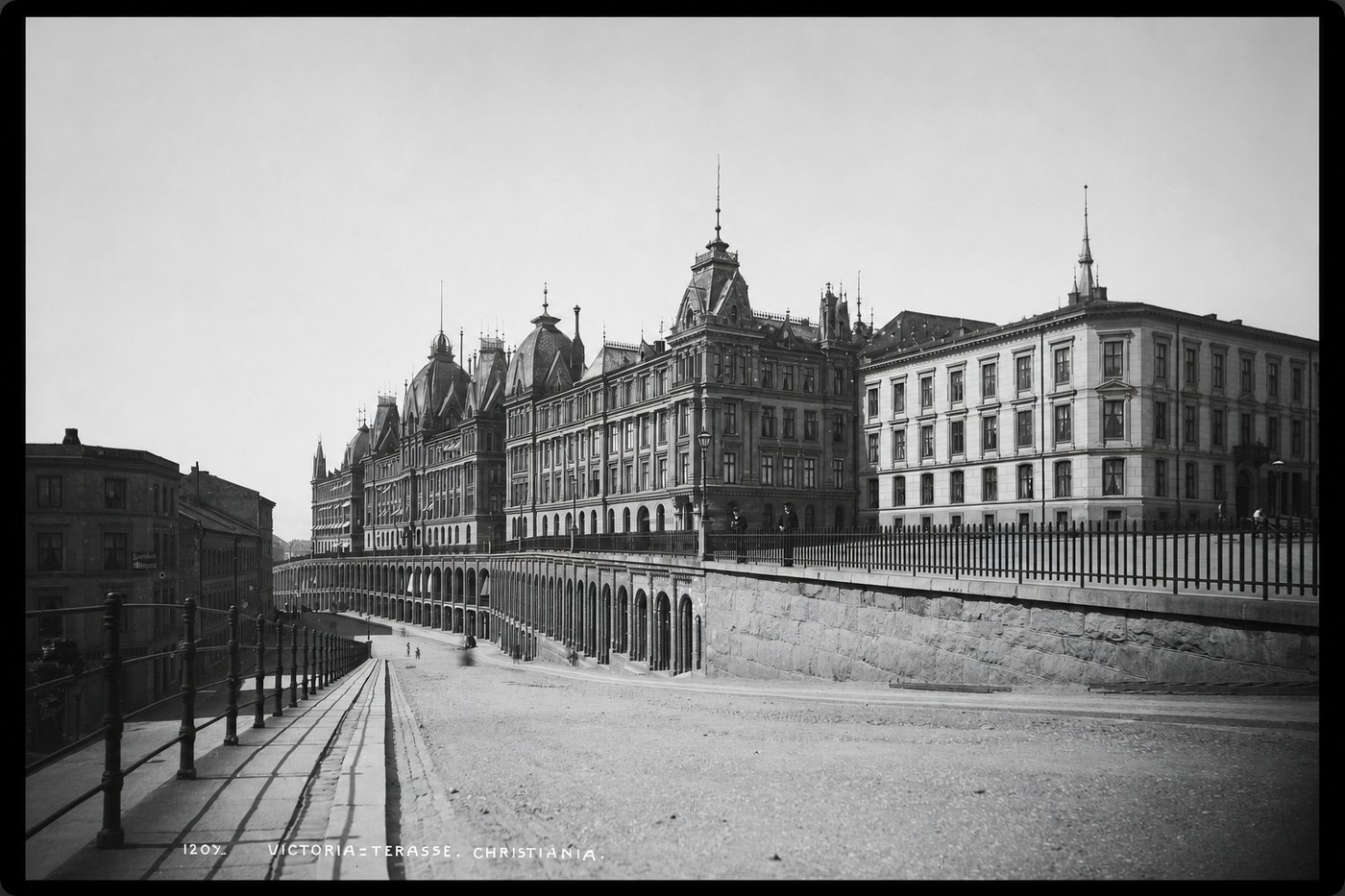
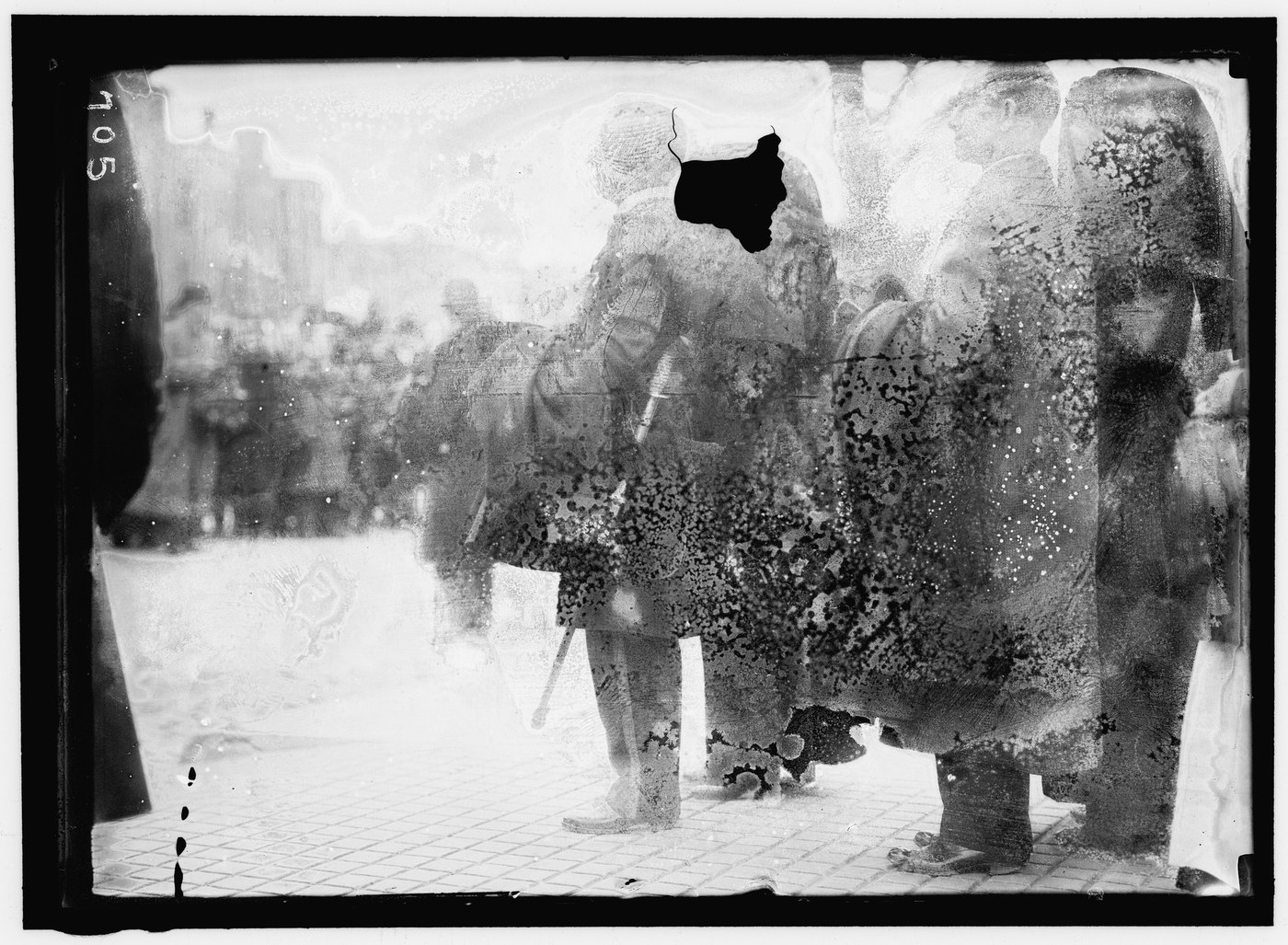

Whatever you do, do not wipe it
Wiping grinds the spores into the emulsion and takes the surface off with them. Get the print dry and cool, keep it apart from the others until it is, and hold it by the edges. Scanning a mouldy photograph leaves spores on the platen, so give the glass a wipe afterwards. The physical handling is in the guide below.
Questions about this sort of damage
- Is foxing the same thing as mould?
- Not quite, and for our purposes it makes no odds. Foxing is the rust-coloured spotting associated with damp paper and the metal impurities in it; mould is the living growth. Both come off a scan the same way.
- May I clean it before scanning?
- A soft brush at the edges and nothing further. Anything damp, anything abrasive and anything from under the sink will cost you surface you cannot replace.
- Ought I to throw the mouldy ones out?
- Not before they are scanned. Once the scan exists, the photograph and the piece of paper carrying it are two separate things, and you can decide about the paper with a clear head.
Try it on yours
One photograph, mended, free, with no card. Send this exact sort of damage and see the result before spending anything.
Mend one photograph, freeIf it doesn't look like the person you remember, you don't pay.